Souring On Artificial Intelligence

The new butt of family holiday jokes

There’s an interesting article in the New York Times called Why Do Americans Hate A.I.? The article goes through the litany of some of the bugaboos just about anyone can recite from memory these days: jobs, trust, and agency. As fast as Artificial Intelligence has dominated the conversation, warnings about the pitfalls have run side by side in what I think resembles a barefooted three-legged sack race over broken glass.

Andrea de santis zwd435 ewb4 unsplash.

Over the holidays at what seemed like an infinite number of family gatherings I picked up on some interesting themes that I mentioned in my end of year post about all things Apple that I think is worth calling out here again. Everyday Janes and Joes are souring on artificial intelligence, not for any of the now almost clichéd anti-AI reasons, but after everyday unsatisfactory encounters with their doctors, banks, and any number of the other institutions and business that they deal with.

As I said in that post about Apple, 

I also think Apple and the other tech companies need to pay attention to the warning signs that are starting to bubble up about Artificial Intelligence. I think most of the growing distaste of AI comes not from what these tech companies are offering on computing platforms, but from the day to day encounters people are experiencing in their daily lives as more and more non-tech companies roll out versions of AI support. The way I’m hearing and feeling it, jokes and complaints about AI at holiday gatherings this year are starting to compete in numbers with ones about government and politics.

Because money rules the roost, most of the conversations we hear about Artificial Intelligence center on how much money is being spent propping up and expanding the bubble that is keeping a sagging economy afloat like a hot balloon on a cloudy day. There’s only so much liquefied propane in any tank once things lift off.

Here’s the thing about holiday family gatherings. I can’t remember one when conversations didn’t at some point offer up a “you’ve got to try this” recommendation or some sort of eye-grabbing new thing  or trend that captured attention along with the usual complaints and grievances. But AI-negative conversations seemed to take precedence on the grievance side of the ledger this year.

Everyday folks don’t care about who wins the AI technology race or who has the best on device AI or how many tokens a system offers. They care about getting results in less time and more so, getting it done with a human they can talk to, not a robot in a chat window. So far based on the jokes, swearing and condescending attitudes I’m hearing (anecdotally, I admit) everyday folks aren’t buying the pitch, but they’re getting closer to picking up the tar.

We can talk about data centers, job efficiencies and job losses, chatbots, AI slop, and scientific advancements all day long, but when everyday folks on the ground develop a distaste for what you’re selling and turn your efforts into the butt of a joke, eventually you need to discount or clear out the inventory no matter how many data center servers you pop up.

Even so, perhaps that’s the aim of the A.I. purveyors. If they salt the fields with enough of their product to the point that everyone condescendingly abides it the way they do government, it may not matter if it doesn’t offer any harvest that yields nutrition, just that it yields a ubiquitous tolerance.

(Image from Andres De Santis on Unsplash)

You can also find more of my writings on a variety of topics on Medium at this link, including in the publications Ellemeno and Rome. I can also be found on social media under my name as above.

New Titles Now Available on Public Domain Day 2026

Boop Oop A Doop

As every year turns into a new one so too do many creative properties enter the public domain on what’s called Public Domain Day. Books, films, sound recordings, and even cartoon characters worm their way out from under U.S. copyright protection and become free to copy, share and repurpose.

Public Domain Day 2026 MontageCC-BY.

This year’s crop includes William Faulkner’s As I Lay Dying, Dashiell Hammett’s The Maltese Falcon, the first four Nancy Drew books, Agatha Christie’s The Murder at the Vicarage. and the movies All Quiet On The Western Front, Animal Crackers, and The Blue Angel among others. Edna Ferber’s book Cimarron and the Academy Award winning film adaptation of it also became available. Songs like I Got Rhythm, I’ve Got a Crush On You, and Embraceable You are a few of the tunes.  Sound recordings now available are from 1925, while other categories are from 1930.

The Duke University Center for the Study of the Public Domain chronicles what’s newly available in the public domain each year and you can see fuller descriptions here.

There are some catches to some of the releases, especially as regards to cartoon characters. The original versions, sometimes with different names and likenesses than they have later been associated with are what are now available, while later more familiar iterations remain under copyright. Betty Boop is one such example grabbing the headlines this year, but that character looked quite different in its original characterization as a dog with floppy ears than what most now recall.  See the center of the image above to show the difference and see the original character in the video below.


(Image from Duke University Center for the Study of Public Domain)

You can also find more of my writings on a variety of topics on Medium at this link, including in the publications Ellemeno and Rome. I can also be found on social media under my name as above.

My Viewing and Reading Picks for 2025

Another year of complex viewing and reading

Another year comes to an end. A new one gets ready to begin. 2025 felt less complex than 2024. Lines weren’t as blurry with one exception that I’ll get to later. In a year when the rush to redefine and compete for the lowest common denominator felt like a three-legged sack race over broken glass, complexity again drew my attention and stuck with me. There’s a great leveling happening, whether intentional or not. But as long as we can advertise against whatever the content is, it seems to matter less and less what the content is or how it’s made.

When it comes to viewing entertainment it was a year when the quality line between movies and streaming TV blurred even more as excellent series work competing with the big screen for some of my favorite viewing. The Pitt and Adolescence were two of the finest things I watched this year.

There are a number of titles in these lists that would qualify for what is being called Resistance Cinema. Each one is deserving of inclusion in that list for immediacy. Any lasting impact will only be determined with the passage of time and all of what we’re currently resisting either cements or cracks.

I don’t believe in “best of” lists. There’s good stuff being created amidst all of the mediocrity and my judgement on what’s good is probably not yours. I pick what attracts and holds my attention. I also don’t see or read everything and the holiday release schedule geared to coming in under the wire for awards recognition is a silly game for insiders and not for me. There also may be a title or two that I didn’t catch until 2025 even though it was released in previous years. Goodness knows there are books waiting to be read.

If there’s a link with a title, I took the time to write about it. I should have done that more. So here’s a list in no particular ranking order of what I found most intriguing throughout the year.

Movies
Streaming TV
Books
  • 1929 by Andrew Ross Sorkin
  • The Mission by Time Weiner
  • Apple In China by Patrick McGee
  • The Director by Daniel Kehlmann

Have a Happy New Year!

You can also find more of my writings on a variety of topics on Medium at this link, including in the publications Ellemeno and Rome. I can also be found on social media under my name as above.

My Year In The Apple Fruit Basket 2025

Not a good fruit crop yield for Apple

2025 was an odd year toiling in Apple’s orchard.
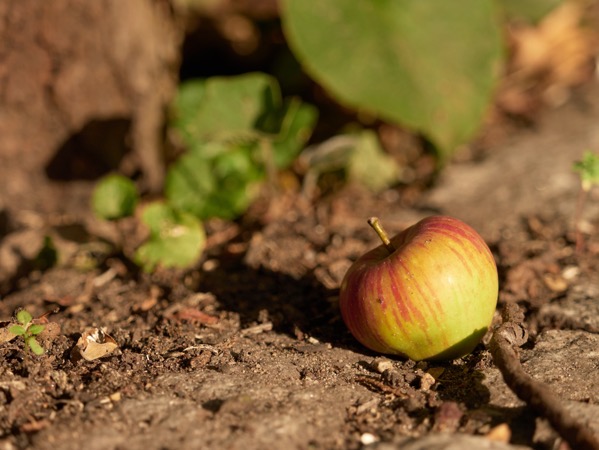
Shutterstock 1478322374.

Getting this out of the way upfront, it was a year that Apple’s corporate behavior, personalized by Tim Cook, made me think seriously about looking to fill my computing needs and habits elsewhere. That’s an ongoing discussion I’m having with myself. As it rattles around my brain, I don’t see an alternative that is any better or any worse from a corporate posture point of view. Apple has plenty of company.

From a technology point of view I also don’t see any better alternative beyond reliving my past hobbyist days with Linux that I’m far too old to contemplate. I used to be that geek. I’m not anymore. Aside from communal political knee bending, every tech company’s plunge into the Artificial Intelligence swamp has mucked up everything, everywhere all at once, in one way or another.

I have to touch Windows now and again and every time I do I feel like I need to take a purgative and wash my hands. I feel much the same about Google’s products. Life as a geek was already becoming increasingly more distasteful in the days when it was just the algorithms that enshittified everything, but adding Artificial Intelligence into the mix has created a slop that even hogs are beginning to turn away from. I know that’s all here to stay and I’m honestly sad that it is.

Hardware

This was the first year that I didn’t upgrade much Apple hardware. I don’t think it was a conscious choice correlating with Apple’s corporate behavior, but I won’t rule out my subconscious working against my small contribution to Apple’s bottom line. Let’s put it this way, I didn’t feel the usual gadget lust tugs and twinges over anything Apple announced this year.

I did upgrade to an iPhone 17 Pro and didn’t even think twice about taking a serious look at the iPhone Air. Apparently I wasn’t the only one. There’s nothing really remarkable to say about the 17 Pro. It’s as good and solid as it’s predecessor and if that’s incremental, than incremental is more than enough for me. I think that’s also true for most users.

I did pick up a pair of AirPods Pro 3 and wrote a quick review that you can read here. The battery life on the AirPods Pro 2 was approaching end of life, so it was time, and I use AirPods a lot.

I also upgraded to the Apple Watch Series 11 from the Series 10. It’s not that the Series 11 does anything more remarkable from a technology perspective. It doesn’t. But I’m in sort of a trap of upgrading every year due to the technology I use to monitor my diabetes.

I use the Dexcom G7 sensor that pairs with both my iPhone and Apple Watch to show me and my doctor how I’m doing with my blood sugar readings. I’ve come to rely on the constant monitoring on the Apple Watch app more than I do on the iPhone. But the two devices and their apps are married. On the Apple Watch that constant monitoring takes a heavy toll on Battery Life and Battery Health. Since I’ve been using that technology Battery Health can degrade at or below 70% in a year. That’s enough for me to upgrade every year.

That is an excellent example of one of the pitfalls of Apple’s development pace that drops new operating systems annually, but trickles out fixes over the course of a year. Dexcom developers take quite a bit of time to catch up with new hardware and software. They have to. They are a medical device company. That lag is certainly more acute with a device that monitors medical conditions, but this year’s round of operating system changes have been challenging for developers in all software categories leading us all into a perpetual year of beta software.

Summing up what I feel about Apple’s 2025 hardware releases I’ll leave it this way. Apple continues to make good improvements with each hardware iteration. Quite frankly, I’d be content to see Apple continue iterating the way it has since the dawn of the M-series chip change, but the many voices continually calling for something newer and bolder seem like they’ll have their day in the next few hardware cycles.

The current crop of Apple hardware has matured into the best I’ve seen on the market. Here’s hoping all that’s rumored continues that trend. That said, I don’t really see the appeal of a vastly more expensive folding iPhone beyond it being a regressive retro move and small enough to make it easier to stuff in a pocket. I guess the next big retro innovation will be to bring back mechanical keyboards. But, hey the Commodore 64 also made a come back this year. I’m guessing a folding iPhone will be enough to excite the faithful. For a few months.

Software

Software provided the real color on Apple’s fruit plate this year with what they shipped and what they still haven’t. The Apple Intelligence slices are browning around the edges, leaving an unappetizing anticipation for what may or may not be unveiled. I say “may not” because in Apple’s announcement last spring delaying the rollout of how Apple Intelligence integrates with the “new Siri” there was an important word that most seem to have overlooked. Here’s the statement:

“Siri helps our users find what they need and get things done quickly, and in just the past six months, we’ve made Siri more conversational, introduced new features like type to Siri and product knowledge, and added an integration with ChatGPT. We’ve also been working on a more personalized Siri, giving it more awareness of your personal context, as well as the ability to take action for you within and across your apps. It’s going to take us longer than we thought to deliver on these features and we anticipate rolling them out in the coming year.”

The key word in that statement is “anticipate.” Most conventional assumption makers believe whatever Apple is working on will roll out sometime in the first half of 2026. But that word “anticipate” is a great hedge that only a PR professional or lawyer could love. I don’t doubt the pressure is on to release something. I wouldn’t bet a dime on it happening before WWDC 2026.

As for what Apple Intelligence is currently, it’s still nothing to write home about. Notification summaries remain a comedy gold mine. I think I’ve touched the Writing Tools a few times, but fall back on other proofreading habits and tools. Whatever Siri is or is not doing, it’s gotten worse and even less predictable than it was before. Every time an accidental touch of the camera button light’s up the border of the screen it’s more a reminder of what’s not there than what it was promised to do. Whatever Apple is planning, the current iteration feels like it’s been largely abandoned like a rotting piece of fruit.

Liquid Glass was the feature that did ship. Countless words have proliferated around the Internet about the design change. I’ve written a few myself. My take at year end is that Liquid Glass is neither here nor there.

Legibility issues and design disasters need lots of work and attention, most of which won’t come while the number 26 is still affixed to the operating systems. Devices still work, even though I’m seeing more and more haphazard weirdness as app developers try to play catch up while Apple itself is still trying to chase down its own problems.

Given the leadership turmoil within Apple who knows what Liquid Glass may or may not become in the future. But then who knows what it was actually intended to be in the first place, beyond a distraction from the Apple Intelligence miss. It certainly wasn’t designed to fulfill anything Apple’s marketers thought it might. If there’s harmony in trying to unify things across platforms, someone needs a basic course in music theory.

While I don’t hate Liquid Glass my continuing impression is that it still feels childish in a bubbly sort of way that doesn’t jive with the sophistication that the advanced hardware platforms seem to beg for. That was my first impression when Liquid Glass rolled out, and it was solidified after spending a large junk of time with my grandkids and other relatives’ kids watching them play children’s games on their non-Apple tablets over the holidays.
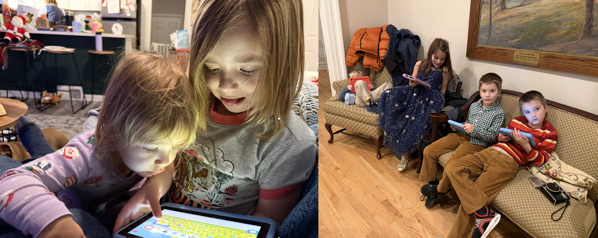
CleanShot 2025-12-30 at 15.43.21@2x.

It may look cool to some, but it feels like undercarriage lighting on a car to me.

There Were Some Good Things

The most important operating system change that Apple made was iPadOS 26, finally instituting, and then continuing to iterate on, a much better windowing system for iPads. 

And, the best new feature on any of the Apple devices I use the most is the Wrist Flick to dismiss a notification on my Apple Watch. It’s simple, it’s effective, it makes sense on all levels. It should have existed earlier. And it should be what Apple aspires to with everything it creates.

Spotlight was given an overhaul offering new features like a clipboard manager. I’m still experimenting with it, but can see how it might replace Raycast in the future if Apple continues iterating on it. It’s a good addition that still needs work.

I think Apple is on to something with the changes it made for the Phone app to try and help alleviate spam calls. I hope they continue to improve this, because as good an effort as it is, I and others still find it confusing. 

Perhaps the best thing about the OS 26 releases beyond that is that all of my devices are working as I anticipate if I look past (not through) Liquid Glass and avoid Apple Intelligence.

Summing Up

In the end, I think 2025 will be considered a lost year for Apple. I maintain that Apple’s ability to take the long view strategically hindered more than it helped. And I think that some of the executive level changes reflect that. But the fact that it takes a long time to see any new substantial change in an already crowded and confused orchard didn’t argue well for the year to be a success. The political posturing alongside the product missteps has led to my personal disgruntlement and I know it has for many others as well.

One of the many Apple mantras that we’ve become accustomed to is that Apple designs its products for 90% of its users. That may indeed still be true. As much as I feel comfortable with steady iteration in hardware and software, it feels to me increasingly that Apple is reaching more and more for innovations that excite the remaining 10%. I get that. And to a degree it’s commendable. But in my experience with the users I support, the majority of those in that 90% probably never even attempt to use many of these new innovations. It’s not a case of reach exceeding grasp in my opinion. Rather, it’s reaching in the wrong direction.

Apple has already made some noise that the next OS versions will be more fixing and futzing rather than feature rich. How could it not be? By the same token, how could it be if, I as feel is increasingly likely, it will be the first time we see what the new Siri and Apple Intelligence will really offer.

I also think Apple and the other tech companies need to pay attention to the warning signs that are starting to bubble up about Artificial Intelligence. I think most of the growing distaste of AI comes not from what these tech companies are offering on computing platforms, but from the day to day encounters people are experiencing in their daily lives as more and more non-tech companies roll out versions of AI support. The way I’m hearing and feeling it, jokes and complaints about AI at holiday gatherings this year are starting to compete in numbers with ones about government and politics.

I don’t think that’s an accomplishment that augurs well.

(First image from Johann Lensless on Shutterstock)

You can also find more of my writings on a variety of topics on Medium at this link, including in the publications Ellemeno and Rome. I can also be found on social media under my name as above.

PSA: Changes In U.S. Post Office Rule Affect Date Sensitive Mail

The check may be in the mail means something different going forward

There’s a change in U.S. Post Office rules that went into effect on December 24, 2025 that will affect anyone who needs to drop a date sensitive item in the mail. If you use what is now commonly referred to as “snail mail,” think taxes. Think donations that you make the end of the year. Think normal bill paying.

Shutterstock 1093687493.

We’ve been accustomed to what was a time honored legal tradition that if we dropped that bill in the mailbox or at a post office that it was postmarked that day and the postmark would be honored when it was received. When it comes to end of the year donations and ordinary bill paying the “mailbox rule” was honored as the date that should be credited or accepted. Well, that’s no longer necessarily the case.

Again, think of every news story you’ve ever read about long lines of last minute tax filers at a post office on April 15th. The new rule doesn’t actually change when an item is postmarked but it clarifies that a machine-applied post mark represents “the date of the first automated processing operation” at a processing facility rather than the date the piece of mail was dropped off. In USPS speak:

…while a postmark confirms the USPS possessed a mail piece on the date inscribed, that date does not necessarily align with the date the USPS first accepted possession of the item.

So, if you drop off mail in the box in front of your post office don’t count on it being post marked if you beat the pickup time marked on the box. If you do a search on this change you’ll see plenty of links from accounting firms alongside local municipalities giving a heads up to clients and local citizens.

There is a remedy for customers who need something post marked on a specific date. You can go to a post office and request a manual postmark, or when you pay for postage at a retail counter the machine label affixed by the post office also indicates the date. Of course you could also pay for Registered or Certified Mail and keep the receipt as evidence.

Although I’m not sure how much those remedies will work when it comes to mail in voting. Which I’m sure is part of the point.

(Image from Jonathan Weiss on Shutterstock)

You can also find more of my writings on a variety of topics on Medium at this link, including in the publications Ellemeno and Rome. I can also be found on social media under my name as above.
Sunday Morning Reading

Sharing thoughts about big ideas and little things

Sunday Morning Reading is back from a two-week hiatus in which we watched the grandkids while their parents began moving into what will be their new house after the first of the year. It was a big deal featuring lots of little things with the little ones. As usual the column this week presents some interesting reading and writing that I think worth sharing. Big topics side by side with little things.

As the Christmas season I knew growing up begins to wind down and everyone begins gearing up for the New Year, I ran across Matthew Cooper’s Why We Need A New Dickens. He makes a good argument, but in my experience everyone loves reading what Dickens chronicled, but somehow it never really catches on.

Keeping somewhat in the Christmas vein The Guardian View On Far-Right Perversions Of The Christmas Message: Promoting A Gospel Of Hate by the Guardian’s editorial department hits its target, but in a glancing blow that proves my point from the link above.

NatashaMH takes on The Great Wall Of Honesty with blunt truths, bear hugs, and a bit of resilience.

JA Westenberg points out that we never pay much attention to the tech folks who do the grunt work behind the scenes to keep things running in The Rime Of The Ancient Maintainer. That’s the little story behind most of the big things we take for granted.

Illustrator Lauren Martin writes On The Pitfalls Of Saying Yes To Everything. Hat tip to Stan Stewart for this one.

I don’t usually link to book reviews in this column, but this one by Dorian Lynskey of Sven Beckert’s book Capitalism: A Global History made me buy the book. Check out Capitalism by Sven Beckert Review — An Extraordinary History Of The Economic System That Control Our Lives. (FWIW there are no affiliate links on this site.)

Speaking of the little things, David Todd McCarty enjoys The Casual Comfort Of Champagne And French Fries.

This piece by Josh Marshall has been sitting in my Sunday Morning Reading queue during the aforementioned hiatus and it’s certainly lost none of its luster with time. Check out Will The 21st Century Nabobs Win Their War On Public Accountabilty?

I’ve followed and linked to a number of Denny Henke’s posts about how he’s changing his personal computing habits this year. His 2025 End Of Year Personal Computing Check-In is worth a read even if you haven’t been paying attention up until now.

Neil Steinberg notices things big and small and occasionally writes about those he hasn’t seen in a while. Check out his observations on seeing an Armored Car.

And to close out this week and this year’s Sunday Morning Reading, here’s a piece that good friend Sumocat linked to that is indeed an obituary. One worth a look even if you never noticed or took for granted what the deceased created, The Moylan Arrow. Take a look at The Inventor Of The Little Arrow That Tells You What Side The Fuel Filler Is On Has Died by Daniel Golson.

It’s the little things that make a difference in this big world. Have a happy turn of the New Year.

If you’re interested in just what the heck Sunday Morning Reading is all about you can read more about the origins of Sunday Morning Reading here. If you’d like more click on the Sunday Morning Reading link in the category column to check out what’s been shared on Sunday’s past. You can also find more of my writings on Medium at this link, including in the publications Ellemeno and Rome.

The Before Times

Family circles

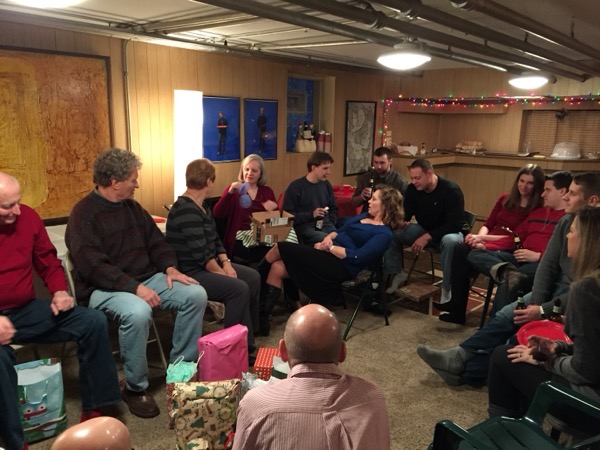
The Before Times. Today begins the round of family and friend holiday gatherings that follow Christmas. In Chicago basements and dining rooms. In the occasional pizza parlor on the Northwest Side. I call it The Before Times because it was before Trump. Before COVID. Before Trump again. Before some of the folks in this picture from 2014 succumbed to illness, divorced, or on the flip side gotten married and had kids, or seen their kids finish college and move on.

Like I said, before so much.

These gatherings were and are always fun. Always a bit tedious. Always full of laughter. Always with an air of tension.  Always always.

While they still happen, so much has changed. Families have separated and merged into new families with new family traditions. The younger ones have scattered across the country and don’t always come back for the holidays as they build their own. As a matter of fact, we’re in the midst of building a new one with my daughter and our grandkids. One family grouping continues the bi-weekly Zoom call that began during COVID.

But that’s life and the part of life that holidays always remind us of. Regardless of what’s happening within our family circles or outside of them, life goes on. It is just always changing.

You can also find more of my writings on a variety of topics on Medium at this link, including in the publications Ellemeno and Rome. I can also be found on social media under my name as above.
The Search For The Coat

Never quit on a garment or a search for the perfect gift

Back in the day when I was writing gadget reviews for GottaBeMobile I did reviews of all kinds of things related to tech. Every now and then a product would cross my path that I liked enough to spend my own money on. One of those happened to be a coat from SCOTTeVEST.

If you’re unfamiliar with any of SCOTTeVEST products their outerwear is designed with many pockets to carry tons of gadgets and gear without looking bulky or overstuffed. Their website was famous for its X-Ray views of all you could carry in the pockets. I’ve owned a few of their coats and vests over the years, but this one became my favorite for a number of reasons.

Brad Thor Alpha Jacket - SCOTTEVEST.

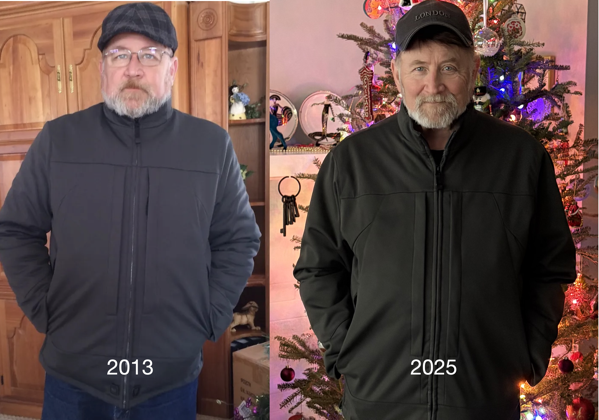
There’s a great line in Larry McMurtry’s western epic Lonesome Dove spoken by Augustus McCrae that says “You know Deets is like me — he’s not one to quit on a garment just because it’s got a little age.” I’m much the same. I’ll wear a piece of clothing out before retiring it, and this coat is one I’ve worn all too close to the bone. So much so that when I pulled it out of the closet this year as colder weather approached I told my wife that this was going to be the last year I could wear the thing and I was going to be very sad to retire it and shop for something to replace it with next year. I wasn’t complaining. 12 years in the life of a coat is actually a good run.

Even so, my wife was listening. The only thing less forgiving than my approach to hanging on to an article of clothing long after its usefulness is my wife’s determination when it comes to finding and acquiring something she wants, especially if it’s a gift for someone. Like a dog on a bone she managed to track one down in excellent condition and presented it to me as a Christmas gift.

CleanShot 2025-12-26 at 13.39.05@2x.

Turns out, as with all things about my wife, there’s a story behind her hunt.

The coat in question is or was called the Brad Thor Alpha Coat. Brad Thor is an American action thriller novelist. His Scott Horvath series of books replaced my Tom Clancy addiction many years ago, merely by coincidence as regards to this coat.

Beyond featuring over 35 pockets to carry your tech gear, (you could even carry a full-sized iPad in one of them, and I did), the original design featured ways to carry and access a handgun, pockets to hold and quickly access a dagger, an RFID pocket to avoid skimming technology, and for those who might need to wear bullet resistant body armor underneath it was sized a little larger. Thor was quite involved in the design of the coat which fits completely with the milieu of his action thriller writing. The color of the coat is called Squid Ink.

For the record, my everyday carry has never included handguns, daggers, or body armor, but often has included an array of tech gadgets, especially back in the days when I was traveling by air more frequently. Those were different days and you could plop the coat down on the conveyor at airport security and sail on through. As a bonus each year when we put away the winter gear all my various gloves, scarves, and winter hats get stored in the pockets.

But back to the story. Along the way it turns out that Brad Thor and SCOTTeVEST had some sort of falling out, and Thor stopped endorsing the coat or any of the company’s products. The company stopped using his name and manufacturing the coat. I knew they had stopped making the coat but never looked into the why of it because hey, the coat was in good shape until the last few years when wear and tear eventually started showing.

My wife’s tireless search involved corresponding with a number of folks on eBay and other websites, exhaustively sending them measurements to check and asking for more pictures than they made initially available. There were apparently plenty not in my size (either too big or too small) but she finally found one that was just right and made the deal. It was quite the surprise on Christmas morning. She’s the real Alpha in this story.

So this post is both a testament to my wife’s dogged determination as well as the Brad Thor Alpha Coat. Happy to say it’s great to have a replacement that I hope will last another 12 years. Which is probably longer than I will.

For the record none of the links in this post are affiliate links. You can read my 2013 review of the coat here.

You can also find more of my writings on a variety of topics on Medium at this link, including in the publications Ellemeno and Rome. I can also be found on social media under my name as above.

Visions of Sugar Plums

Happy Christmas Eve!

Here’s to a Happy Christmas Eve to all who celebrate the holiday and as well as to those who don’t. May visions of Sugar Plums dance in your dreams. 

And if you’re looking for a very interesting bit of reading and look back, check out this column from the late Mike Royko from 1966 called Mary and Joe, Chicago Style. 

You can also find more of my writings on a variety of topics on Medium at this link, including in the publications Ellemeno and Rome. I can also be found on social media under my name as above.